Bhitarkanika can be considered as one of the most elusive tourist spots to cover completely in one go. It is so because of the awkward and really difficult terrain that one needs to traverse through.
Apart from that, anyone who goes on a Bhitarkanika Tour doesn’t get a great place to stay without prior information. If not scavenged, the search can be difficult at a crunch time. Still, it is not a huge issue at all.
Examining such a wide area of geography which is literally filled with all sorts of flora and fauna is a treat to the eyes. It also houses some of the critically endangered species of plants and animals.
In that case, accommodation becomes secondary, however, it is still necessary to have it in the back of your head. For now, there are three major things that one needs to cover if they have a Bhitarkanika Tour in hand. Those are as follows:
- Bhitarkanika National Park
- Bhitarkanika Sanctuary
- Bhitarkanika Ramsar Site
The Bhitarkanika National Park is nothing but the conglomerate of various mangroves, plants, animals, etc. The Bhitarkanika National Park has a collection of extremely robust mangroves that are halophytes.
Halophytes as in these distinct plants are ridiculously salt-tolerant and can potentially grow with marine water right underneath them. Essentially how mangroves grow across the whole world. This part of the location includes a huge number of creeks, estuaries, mangrove forests, etc.
Possibly regarded as the heartland of the Bhitarkanika Sanctuary, the Bhitarkanika National Park houses a very delicate part of the mangroves that won’t tolerate even minute artificial changes to the environment. It will in-turn affect the marine life that grows in the vicinity.
Secondly, comes the Bhitarkanika Sanctuary. Along with the mangrove forests and the different types of plants and geographical patterns around, the wildlife gives a monumental touch to the picturesque landscape.
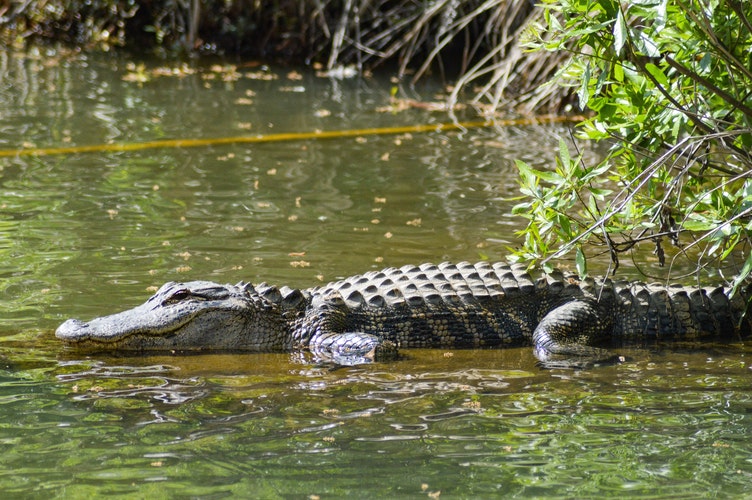
The Bhitarkanika Sanctuary is the home to the Indian Salt Water Crocodile. This species is considered to be a critically endangered species. Wildlife lovers who often turn up to the scene visit the same just to snap a photo or two of the majestic beast.
Apart from the Indian Salt Water Crocodile, there are other species of wildlife as well that reside here such as:
- Indian Python
- Water Monitor Lizard
- King Cobra
- Red-naped Ibis etc.
These are the main forms of wildlife that are visible specifically. Along with these, the other types of animals that are scattered throughout the Bhitarkanika Sanctuary are monkeys, jackals, otters, wolves, mongoose, etc.
There are only two possible routes into the Bhitarkanika Sanctuary known as Khola and Gupti. Prior permission is necessary from the officials in order to venture inside the Bhitarkanika Sanctuary.
And finally, we have the Bhitarkanika Ramsar Site to explore. The Bhitarkanika Mangroves came to be considered as a Ramsar Site. A Ramsar Site is a conservational and sustainable piece of wetland that has massive international importance.
UNESCO recognized the same in the year 2002. Apart from the Salt Water Crocodiles, the Ramsar Site is also the home of the Olive Ridley Sea Turtles. The Gahirmatha Sea Beach is the breeding ground for these turtles.
The state government of Odisha takes utmost care so that neither tourists nor predators destroy the eggs before they are hatched. These are the particular spots and locations that one needs to visit in case they have a Bhitarkanika Tour in the plan.
Camping inside the Bhitarkanika Sanctuary is mostly prohibited in the active areas as far as wildlife is concerned. Follow up with the authorities beforehand.