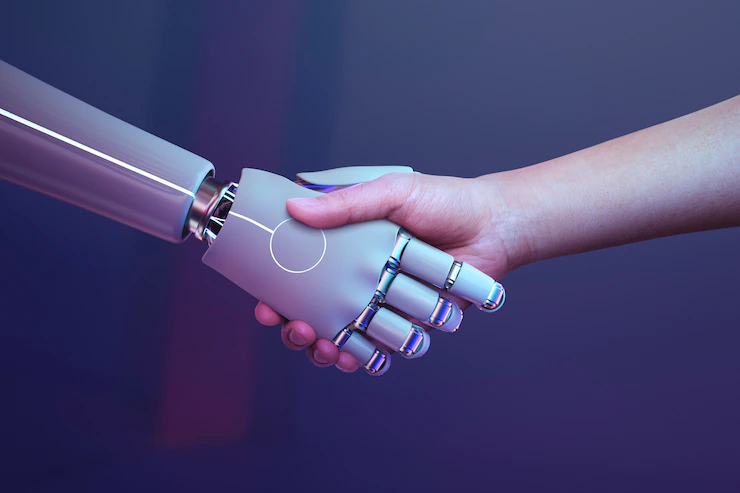
Workforce management and planning underwent a major transformation during the pandemic as workers and the work shifted from offices to homes for a long period. Still, these challenges also brought incredible ideas and innovation in workforce management software for companies and its practices with new technologies. Work from anywhere began to get popular. Businesses realized automation and artificial intelligence are essential if they want to remain competitive in the market. Manual processes are automated by RPA and AI, increasing their efficiency, and organizations were searching for new methods to augment these technology use and improve their operation.
Another magnificent use of Smart workforce management solutions for companies is how they analyze and utilize data. As per the research, by 2023, 60%of large businesses will automate HCM administration or HCM activities. AI can efficiently manage enormous amounts of data, and intelligent automation can handle relatively complex operations. Therefore, the potential of using AI in workforce management is good, and it is moving up the value chain in workforce technologies. Let us explore what workforce management is and how AI can help enhance it.
So, what is workforce management and workforce management software?
Workforce management is a set of processes that an organization uses to maximize its workers’ productivity and performance. It involves scheduling staff for better labor distribution to complete specific tasks within the dedicated amount of time. WFM ensures right numbers of workers are available at the right time to do the job. The idea of WFM has evolved from call centers where it is important to ensure that agents are available to handle the customer’s calls despite the fluctuations to maintain the service delivery level.
With the right workforce management software for companies and their call centers, they can forecast the workforce needs for a day, even for an hour, by predicting the call volume and other factors at that time. It will enable them to assign the correct number of agents, avoiding overstaffing or overworking agents. Also, these software solutions help them schedule according to their expertise, and AI-enabled workforce management software offers insights into analyzing the data. According to a leading IT and consultancy firm, smart workforce management is comprised of the WFM software, services, and hardware that assist organizations in managing the operational deployment of their workforce.
Workforce management software for companies and Artificial Intelligence
Though artificial intelligence has been around for a long time, in but last decade, it has moved faster with new algorithms and techniques. It has rapidly been adopted in business solutions because of its amazing capabilities. Modern AI is able to engage in unsupervised learning, where users or systems provide sets of data, and the technology can independently analyze it. Moreover, it can discover patterns and trends from the data and independently produces outcomes without relying on any pre-decided rule sets.
So, what does it means for businesses? An AI-enabled workforce management software for companies can move through the mountain of employee and operational data, analyze it faster and produce strategic insights for users, which is impossible for humans. These insights can be used to drive better business outcomes and many other significant advantages.
Harnessing the power of AI WFM software can bring the following benefits to your business:
Improving overall business efficiency
Strengthening worker’s training and skill development with insights
Creating a positive culture with the help of an in-depth understanding of workforce and operations
Boost performance, productivity, morale, and retention
It will help improve the bottom line and build a resilient workforce, ultimately contributing to the growth and development of the organization.
Here are some of the functions of the WFM that can be significantly improved by using AI:
AI in workforce planning
Workforce planning was typically done manually by forecasting the future workforce needs at a specific period. It involves analyzing large volumes of data and complex factors to correctly predict the number of staff needed for a particular process or department. The vacant roles and positions will need recruiting employees, or skilled employees with minimum training can fill the gap-there are many considerations in workforce planning. AI-powered workforce planning and management software can better anticipate employee attrition rates, hiring plans, business growth, and future needs.
AI can go through historical data to identify relevant patterns and trends. It can also use predictive analysis methods to forecast future workforce needs based on the available data. As a result, it will help organizations more accurately and efficiently plan and manage their workforce and ensure that required staff with relevant skills are available for work at the right moment.
AI in workforce scheduling
As said earlier, AI can predict how many staff are needed for a specific period of time for a specific amount of work. Also, AI can schedule an accurate number of employees with matching skills and expertise for the work at that time. Workforce scheduling is a time-intensive and challenging task, and mistakes in workforce scheduling can lead to other troubles and issues, such as losses in work hours, service quality, and profitability of an organization. AI can help streamline workforce scheduling- one of the most important complex functions of the WFM efficiently. It can automate and improve workforce scheduling by analyzing historical data related to employees’ preferences of tasks, skill sets, workflows, and time needed to complete those tasks.
AI in employee timekeeping.
Tracking staff time is another concern for organizations, and AI-empowered workforce management software for companies can simplify it by automating manual timekeeping tasks. For example, it can track employee work hours and attendance by recording employee login and logout and registering breaks and time-offs to save time and money on administrative activities.
These systems can read the time logs, keep attendance records, and even show the real-time status of employee attendance and activities. Users can view their time in and out details, attendance status, leaves, or any breaks and work hours through the dashboards of a web-based WFM software. AI can help these data analyze and offer instant alerts, reminders, or reports for the relevant users for better productivity and management.
AI in performance management
Performance management can also utilize AI as it can analyze the workers’ past performance data and highlight the employees’ strengths and weaknesses. Management can find where high-performing workers have excelled and where bottom liners are lacking so that these factors can be used or addressed by the training or coaching sessions. Skill gaps or issues can be detected through AI-enabled WFM software systems for companies to handle them early. An intelligent workforce planning and management system can collect all the performance data and develop models to forecast future outcomes. It will help identify employees or areas at risk and make necessary changes to improve performance.
Conclusion
An automated WFM application can do wonder for your company. Remote and hybrid workplaces have already made manual processes outdated, and intelligent workforce management software is no more a choice but a necessity for organizations devoted to quality service and customer experience. Select an automated and custom WFM solution that can support your needs and requirements to achieve better productivity and profitability.