Prostate cancer is the most common type of cancer in men in Europe and North America, and the third most common in the world. It is caused by the abnormal growth and division of prostate cells, which can invade and damage other tissues and organs. Prostate cancer can be treated in different ways, depending on the stage, grade, location and characteristics of the tumor, as well as the patient’s preferences, health condition and resources.
The role of diet and nutrition in prostate cancer prevention and progression is an active area of research. Among the dietary factors that have been studied, dairy products, calcium and vitamin D have received considerable attention. Dairy products are rich sources of calcium and vitamin D, two nutrients that are essential for bone health and other physiological functions. However, they may also have complex and contradictory effects on prostate cancer risk and outcomes.
In this article, we will review the evidence linking cheese, a common dairy product, with calcium and vitamin D intake, and their possible role in preventing prostate cancer. We will also discuss some of the mechanisms by which these nutrients may affect prostate cancer development and progression.
Cheese Consumption and Prostate Cancer Risk
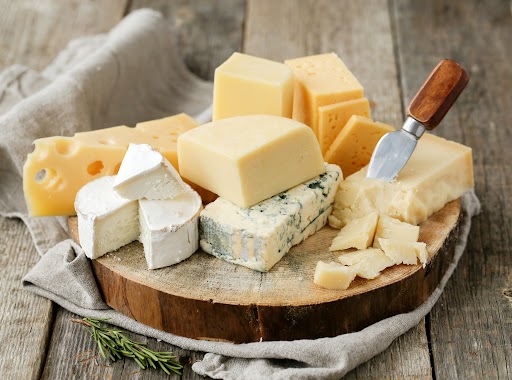
Cheese is a fermented dairy product that is made from milk curdled by rennet or bacteria. Cheese can vary in texture, flavor, color and nutritional composition, depending on the type of milk, culture, enzyme, salt and aging process used. Cheese is a good source of protein, fat, calcium, phosphorus and vitamin A. Some cheeses are also fortified with vitamin D.
Several studies have examined the association between cheese consumption and prostate cancer risk. However, the results have been inconsistent and inconclusive. A 2015 systematic review and meta-analysis of prospective studies found that increased cheese intake was significantly associated with increased prostate cancer risk (relative risk (RR) = 1.09 per 50 g daily). However, another meta-analysis of prospective studies in 2018 found no significant association between cheese intake and prostate cancer risk (RR = 1.01 per 50 g daily).
The discrepancy between these meta-analyses may be due to differences in study quality, cheese types, adjustment for confounders and publication bias. Moreover, most of the individual studies included in these meta-analyses did not find a significant association between cheese intake and prostate cancer risk. Therefore, more high-quality studies are needed to clarify the relationship between cheese consumption and prostate cancer risk.
Calcium Intake and Prostate Cancer Risk
Calcium is a mineral that is essential for bone formation, muscle contraction, nerve transmission, blood clotting and enzyme activation. Calcium can be obtained from food sources or supplements. The recommended dietary allowance (RDA) for calcium for adult men is 1,000 mg per day.
Several studies have suggested that high calcium intake may increase prostate cancer risk by lowering circulating levels of 1,25-dihydroxyvitamin D3 [1,25(OH)2D3], the active form of vitamin D. Vitamin D is a hormone that can regulate cell growth, differentiation and apoptosis, and has anti-inflammatory and immunomodulatory effects. Vitamin D may protect against prostate cancer by inhibiting cell proliferation, inducing cell death, suppressing angiogenesis and metastasis, modulating hormone action and enhancing DNA repair.
A 2007 meta-analysis of prospective studies found that high calcium intake was significantly associated with increased risk of advanced prostate cancer (RR = 1.24 per 500 mg daily), but not total or non-advanced prostate cancer. Another meta-analysis of prospective studies in 2015 found that high calcium intake was significantly associated with increased risk of total (RR = 1.07 per 400 mg daily) and fatal (RR = 1.14 per 400 mg daily) prostate cancer.
However, these meta-analyses also had some limitations, such as heterogeneity among studies, residual confounding by other dietary factors or lifestyle habits, measurement errors in calcium intake assessment and lack of information on calcium sources or supplements. Furthermore, some individual studies did not find a significant association between calcium intake and prostate cancer risk . Therefore, more high-quality studies are needed to confirm the role of calcium intake in prostate cancer development and progression.
Vitamin D Intake and Prostate Cancer Risk
Vitamin D is a fat-soluble vitamin that can be obtained from food sources or supplements. The main food sources of vitamin D are fatty fish (such as salmon), egg yolks, liver and fortified foods (such as milk). Vitamin D can also be synthesized by the skin when exposed to sunlight. The RDA for vitamin D for adult men is 15 mcg (600 IU) per day.
Several studies have suggested that high vitamin D intake may decrease prostate cancer risk by increasing circulating levels of 1,25(OH)2D3, the active form of vitamin D. As mentioned above, vitamin D may have various anticancer effects on prostate cells and tissues.
A 2014 meta-analysis of prospective studies found that high vitamin D intake was significantly associated with decreased risk of total (RR = 0.86 per 10 mcg daily) and fatal (RR = 0.84 per 10 mcg daily) prostate cancer. However, another meta-analysis of prospective studies in 2018 found no significant association between vitamin D intake and prostate cancer risk (RR = 0.99 per 10 mcg daily).
The discrepancy between these meta-analyses may be due to differences in study quality, vitamin D sources, adjustment for confounders and publication bias. Moreover, most of the individual studies included in these meta-analyses did not find a significant association between vitamin D intake and prostate cancer risk . Therefore, more high-quality studies are needed to elucidate the role of vitamin D intake in prostate cancer prevention and progression.
Conclusion
Cheese is a common dairy product that contains calcium and vitamin D, two nutrients that may have complex and contradictory effects on prostate cancer risk and outcomes. The evidence linking cheese consumption with prostate cancer risk is inconsistent and inconclusive. The evidence linking calcium intake with prostate cancer risk is suggestive but not definitive. The evidence linking vitamin D intake with prostate cancer risk is promising but not conclusive. More high-quality studies are needed to clarify the role of cheese, calcium and vitamin D in prostate cancer prevention and progression.