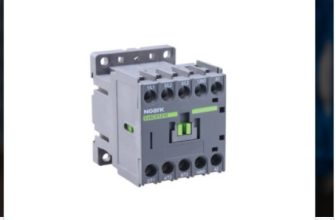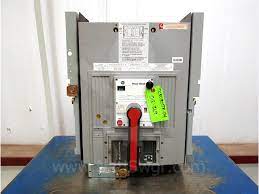
Air circuit breakers have many protection functions to ensure the safety of power lines and electrical equipment. These breakers are most often used for controlling power station auxiliaries and industrial plants. They also offer protection for electrical machinery like transformers and capacitors. These breakers are especially helpful in areas where there is a high risk of fire or explosions.
Air circuit breakers have an advantage over other types of electrical switches in that they use pressurized air as an arc extinguishing medium. This makes them safe and effective at interrupting current flow after a fault occurs. Other types of circuit breakers use oil, gas, or a vacuum to extinguish the arc.
When a circuit breaker contact separates during a trip operation, the gap between them generates an electric arc. This arc must be contained, cooled, and extinguished so that the gap can again withstand the voltage of the power system. The arc is drawn into an arc chute consisting of splatters and then blown upward by both thermal and electromagnetic effects. As the arc moves up it is split, cooled, and elongated by an air blast that sweeps away the ionized gases and assists arc extinction. This helps to increase the arc resistance, which prevents it from re-igniting when the arc voltage is restored to zero during the clearing time.
Air circuit breakers are one of the most important elements in contemporary electrical power distribution networks. They protect power lines and equipment from overcurrents and short circuits by using reliable arc quenching techniques and trustworthy tripping mechanisms. Unlike other types of medium-voltage circuit breakers, such as MCCBs and ICCBs, air circuit breakers do not have an enclosed case. This makes them easier to modify or recondition. Moreover, the simple mechanics of these devices make them relatively easy to maintain. The operating mechanism of an air circuit breaker is powered by compressed air. This air is blown into the operating cylinder through a nozzle and tube each time the breaker opens or closes. This enables the air to extinguish the arc and prevent it from reinitiating after the main contacts have closed or opened. Before a circuit breaker is opened for inspection, it should be disconnected from all electric power (both high voltage and control voltage). This ensures that there is no risk of accidental contact with hazardous parts.
Air circuit breakers have a long lifespan as compared to other electrical devices. Their lifespan can be extended with regular maintenance and inspections. This helps in identifying any issues and rectifying them quickly before they escalate into more serious problems. These devices are widely used in transformers, power stations and industrial and mining enterprises due to their high sectional capability, flawless function, small size and compact structure. They are easy to operate and can be installed in any position in a special drawer base. The structure of ACB includes an operating mechanism, a contact system and an arc extinguishing mechanism.
The basic type of ACB is known as the plain break type and has two horns in its point of contact. The arc of this device is moved into chutes to be lengthened, cooled and extinguished. It can be used up to 11kV. The magnetic blowout type of air circuit breaker uses current in blowout coils to extend the arc moment. Click here or explore our official site to access premium air circuit breakers.