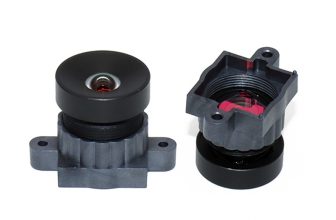
Face recognition lens is a very important recognition system with wide application and safety detection characteristics. It can be used for security protection, human body recognition and other aspects. However, the effect of face recognition lenses will be slightly different in different environments, which also has a great impact on the accuracy and practicality of face recognition technology.
Face recognition lenses will perform differently under different natural lighting intensities. Under sufficient natural light, the face recognition system will be more accurate and reliable, and can capture facial information more clearly. However, when the light is low or too bright, the lens’ performance may be limited. Therefore, it is very important to control the lighting conditions of face recognition lenses in different environments. Artificial lights or other adjustment methods can be used to ensure the consistency of lighting conditions to improve the accuracy of face recognition technology.
Interference in the environment will affect the effectiveness of the face recognition lens. For example, in environments with heavy foot traffic or noisy backgrounds, the recognition system is likely to produce false alarms. In order to improve this phenomenon, manual optimization can be used to accurately control the position and angle of the lens, thereby effectively reducing the false alarm rate.
It is necessary to pay attention to the environment in which the face recognition lens is used. When using it outdoors, you need to consider weather and environmental factors, such as strong sunlight, severe weather, and other harsh environmental factors. These adverse factors may affect the accuracy and stability of the lens and affect the accuracy of recognition.
In addition to the environmental factors of the lens, the application of face recognition systems also requires attention to other issues. For example, the use of facial recognition systems needs to consider aspects such as data security, privacy issues, and ethics.
The performance of face recognition lenses in different environments will be affected by many factors, including light intensity, environmental interference, system environment and other factors. This has a great impact on accuracy and practicality, and requires precise site selection, lens placement and angle adjustment, etc., to effectively improve the impact and interference caused by these factors.