Since time immemorial, when babies were delivered, it was a common practice to treat the umbilical cord (with the blood) as a medical waste. But, now with the advent of the 21st century, science and technology has taken a giant leap for mankind. And now we just have to take a small step and not waste it. It has the potential to save precious lives from lethal diseases like blood cancer. It started walking hand in hand with bone marrow. And according to the FDA, it is now proven to be better than the former, in terms of extraction and also cure. There are banks who store this cord blood and we are one such organisation who you can bank upon.
Is It Painful to Collect Cord Blood?
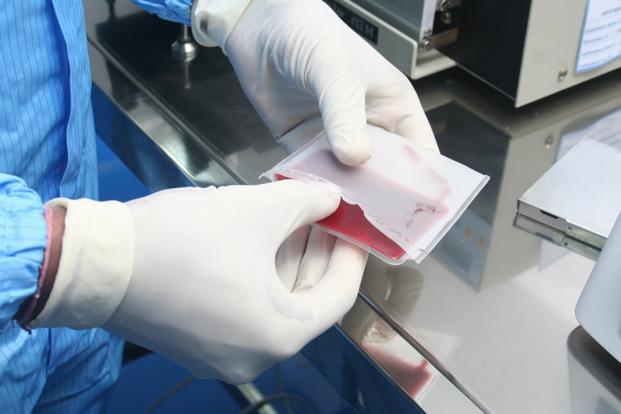
No! On the contrary it is really easy and quick. From the baby, after the baby is separated from the mother, a sterile needle and bag is used to collect the blood that is left behind in the Umbilical Cord and Placenta. The amount of cord blood directly depends on the weight of the newborn, it may be as much as 20% more if the weight exceeds 3.2 kgs.
Why Store Cord Blood and How?
Well, you have a handful of reasons:
Waste not, want not!
Generally, a 150 ml bag is offered to collect up to 128 ml of cord blood and the rest is filled up with anticoagulant. So, naturally the excess is wasted. We, Cordlife India walk that extra mile for you. We provide a 250 ml cord blood collection bag that has the capacity of collecting the maximum 215 ml as it contains 35 ml anticoagulant, 215 – 128, almost 90 ml extra capacity, that is almost 72% more collection than the others of your precious sample.
Recycling is Good for Green, But Bad for RED
For the Umbilical Cord Blood to be successfully stored and used, its corresponding maternal blood has to undergo quality testing for Hepatitis B, C, HIV, etc. The ideal temperature range for transportation of cord blood (4 – 37oC) and maternal blood (2 – 10oC) are different. But if maternal blood and cord blood are collected in the same box, and temperature fluctuates just for the sake of fitting in the tight budgets it compromises with MBS integrity, resulting in faulty testing and hence erroneous reports. We, Cordlife, use dedicated thermoneutral containers, each complying with the diverse temperature range requirements for both kinds of bloods. Hence delivering accurate testing results. So, for us one size should not fit all. It might be a cheaper option to recycle and fit into the same size.
Getting the Vowels Right- AEIOU
Umbilical Cord Blood is processed in a GMP Grade Clean Room. The processing is done by an Automated, Efficient(uniform) Individualized (0 cross-contamination or mix-ups), and Optimized for You. This is a full-proof maximum (99.8 to 100%) harvest of viable cells useful for transplant, that is Mononuclear Cells (MNC), & CD34+. Relevant emerging technologies, like A.I is deployed in AXP (AXP is required to be highlighted somewhere, here it is coming up like an appendage, it’s the hero to make the AEIOU possible), for efficiently adapting to the natural variations of cord blood composition to optimise and bring out the best. And all this is done in just 35 minutes. Why work hard, if we can go smart.
With Standards, We Got a Numero Uno for You
Thorough testing of maternal blood samples are done by NAAT (Nucleic Acid Amplification Test) by automated RT-PCR producing accurate detection of infection. 5 important parameters for testing include:
- Hepatitis B Virus DNA
- Hepatitis C Virus RNA
- HIV Type I subtype MRNA
- HIV Type II
In this crucial situation of pandemic, it is always the best idea to involve top-notch standards in blood culture. We deploy up-to-date technologies for processing each sample. Hence, your health is the number 1 priority for our commitment.
And Finally Life Kicks in
The index of performance in a cord blood sample is determined by 3 important parameters – viability, expansion and potency. The last parameter potency is a measure by which the newly expanded clone cells are imbibed within important constituents of blood like RBC, WBC and platelets. At some of the best private cord blood banks, CFU assay of Cryogenically stored Cord Blood Cells estimates these 3 important parameters.
With life, accuracy is the best policy!