Choosing the correct filter for your laboratory fume hood is essential for controlling chemical exposure and maintaining a safer working environment. Different chemicals release different types of vapors, gases, and contaminants, so a filter designed for one chemical group may not effectively capture another. When selecting a filtration system, you need to consider chemical properties, concentration, exposure limits, and the specific activities performed in your laboratory. Matching the filter to the chemical hazard helps you make informed equipment decisions and avoid relying on unsuitable filtration media.
1. Identify the Chemicals Used in Your Laboratory
Before selecting a filter, identify every chemical that may be released during your laboratory procedures. Start by reviewing chemical inventories, Safety Data Sheets (SDS), and standard operating procedures.
Pay particular attention to:
- Chemical names and concentrations.
- Vapor pressure and volatility.
- Chemical compatibility and reactivity.
- Exposure limits and toxicity.
- Expected operating temperatures.
- Potential chemical mixtures and reaction byproducts.
For example, acetone, ethanol, and toluene are organic solvents, while hydrochloric acid and ammonia present different filtration requirements. You should not assume that one general-purpose carbon filter can handle every chemical.
Create a chemical inventory that identifies the substances, expected concentrations, and frequency of use. This information provides the foundation for selecting an appropriate filtration medium.
2. Understand Different Types of Ductless Fume Hood Filters
Different filter media are designed to capture specific contaminants. Understanding their capabilities helps you avoid incorrect filter selection.
Activated Carbon Filters
Activated carbon filters use adsorption to capture compatible organic vapors. They are commonly considered for applications involving certain solvents and organic chemicals.
However, adsorption capacity varies depending on the chemical, humidity, temperature, concentration, and carbon formulation. Standard activated carbon should not automatically be considered suitable for every organic compound.
Chemically Impregnated Carbon Filters
Some chemical hazards require specially treated carbon filters. Impregnated media contain chemicals that improve their ability to capture selected gases through adsorption or chemical reaction.
Depending on the formulation, these filters may be designed for certain acids, ammonia, or other inorganic gases. Always verify the manufacturer’s compatibility documentation.
HEPA Filters
High-Efficiency Particulate Air (HEPA) filters capture airborne particles such as dust, aerosols, and certain particulate contaminants.
However, HEPA filters do not remove ordinary chemical vapors or gases. If your application involves both particles and chemical vapors, you must evaluate the appropriate combination of filtration stages.
3. Match Filter Media to Specific Chemical Hazards
Your filter selection should begin with the chemical hazard rather than the equipment model. Consider the following general categories:
| Chemical hazard | Filter consideration |
| Organic solvent vapors | Compatible activated carbon media |
| Acid gases | Chemically impregnated media specifically rated for the acid |
| Ammonia vapors | Media specifically formulated and tested for ammonia |
| Particulate contaminants | HEPA filtration |
| Mixed chemical vapors | Manufacturer-validated combination filtration |
| Highly hazardous gases | Specialized engineering controls and a suitability assessment |
Never select a filter based only on a broad chemical category. Two chemicals belonging to the same family can behave differently when interacting with filtration media.
For example, a carbon filter suitable for certain solvent vapors may not provide adequate protection against corrosive acid gases. Confirm that the selected filter is specifically approved for the chemicals and operating conditions involved.
4. Evaluate Chemical Concentration and Vapor Generation
Selecting the correct filter media is only one part of the decision. You must also evaluate how much chemical vapor your process generates.
Consider these operating factors:
Chemical concentration: Higher concentrations can increase the filtration load and shorten filter service life.
Evaporation rate: Highly volatile substances may generate vapors faster than the filter can retain them.
Exposure duration: Continuous operations can load filter media more quickly than occasional procedures.
Temperature: Heating chemicals can increase vapor generation and change filtration requirements.
Humidity: Moisture can affect the adsorption performance of certain filter materials.
For example, a filter that performs adequately during occasional solvent dispensing may be unsuitable for prolonged evaporation processes.
You should provide these operating details to the hood manufacturer and your environmental health and safety (EHS) professional before approving the application. A chemical compatibility assessment should establish whether the system is appropriate at all.
5. Check Filter Breakthrough and Replacement Requirements
Even a correctly selected filter has a limited service life. As chemicals accumulate within the filtration media, its remaining retention capacity decreases. Eventually, contaminants may pass through the filter, creating a breakthrough risk.
Before purchasing a system, evaluate:
- Whether the hood includes a filter saturation monitoring system.
- Whether the manufacturer provides chemical-specific filter life estimates.
- How frequently filter performance must be evaluated.
- Whether replacement filters are readily available.
- How used filters must be handled and disposed of.
Do not rely exclusively on airflow indicators. Proper airflow does not necessarily mean that the filter is still retaining chemical vapors effectively.
Maintain a filter replacement log that records installation dates, chemical usage, inspections, monitoring results, and replacement dates. Follow the manufacturer’s instructions and your laboratory’s approved maintenance procedures.
Remember that filter replacement schedules should be based on the actual application and documented performance, not simply a convenient calendar interval.
6. Recognize Chemicals and Applications That May Be Unsuitable
Not every chemical hazard can be managed using ductless filtration. Some substances have poor retention characteristics, while others introduce serious toxicity, fire, explosion, or reactivity concerns.
You should seek dedicated engineering controls, such as an appropriately designed ducted fume hood, when dealing with:
- Highly toxic or carcinogenic chemicals.
- Pyrophoric and highly reactive substances.
- Explosive or significant fire hazards.
- Unknown chemical mixtures or reaction byproducts.
- Processes involving substantial vapor generation.
- Chemicals that cannot be reliably retained by the available filter media.
Certain low-boiling-point gases and other compounds may not be adequately retained by conventional carbon filtration. Heated acid digestion and other specialized chemical processes also require careful assessment.
Never assume that adding a different carbon filter makes an otherwise unsuitable application safe. Consult your EHS professional and the equipment manufacturer to establish the appropriate engineering controls.
7. Choose a Ductless Fume Hood Based on Your Application
Once you understand your chemical hazards, filtration requirements, and operating conditions, compare equipment specifications.
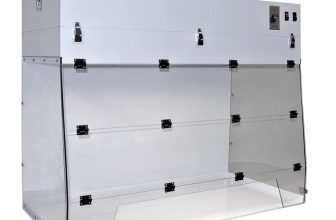
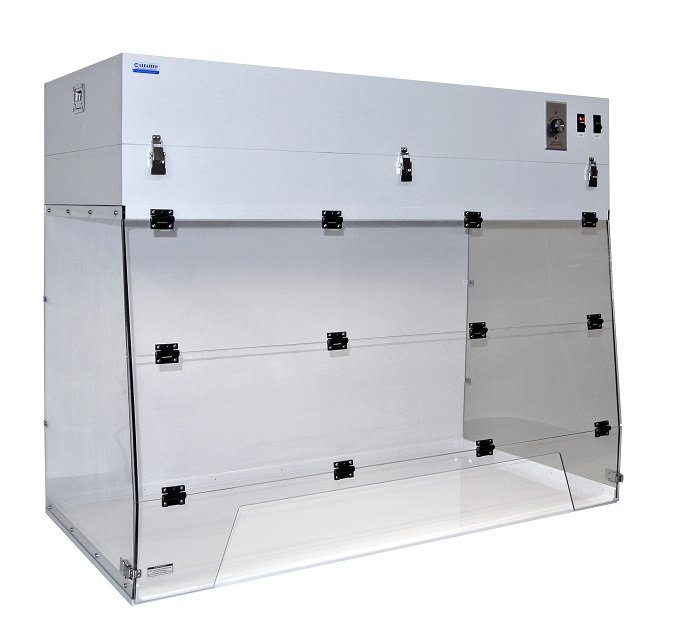
When evaluating a Ductless Fume Hood for laboratory chemical vapor filtration, consider the following:
Filter compatibility: Confirm that the manufacturer approves the filter for every chemical involved.
Filtration configuration: Determine whether the application requires specialized chemical media or particulate filtration.
Airflow performance: Review airflow specifications and containment performance.
Monitoring features: Check for filter saturation alarms and appropriate performance monitoring.
Maintenance accessibility: Evaluate filter replacement procedures and availability.
Application flexibility: Consider whether future changes in chemical usage could affect system suitability.
You should also evaluate the manufacturer’s chemical compatibility documentation before purchasing. A suitable system must meet your actual laboratory requirements rather than simply offering a broad filter selection.
Explore the laboratory equipment and filtration solutions offered by CleaTech LLC to review available equipment options.
8. Establish a Chemical-Specific Operating Procedure
After selecting an appropriate filtration configuration, create a written standard operating procedure (SOP). This document should specify approved chemicals, maximum quantities, operating conditions, filter monitoring requirements, and maintenance responsibilities.
Train laboratory personnel to recognize changes in airflow, alarms, unusual odors, and other warning signs. Stop work and follow the approved response procedure if a filter problem or suspected breakthrough occurs.
You should reassess the application whenever chemical inventories, concentrations, experimental methods, or operating conditions change. A filter approved for one process should not automatically be considered suitable for another.
If you need help evaluating equipment specifications, chemical compatibility, and filtration requirements, Contact us today to discuss your laboratory equipment requirements.
Frequently Asked Questions
How do you select the right filter for a ductless fume hood?
Start by identifying the chemicals, concentrations, quantities, and vapor-generation rates involved. Review their SDS information and compare these requirements with the manufacturer’s documented filter compatibility. Obtain EHS approval before use.
Can activated carbon filters remove all chemical vapors?
No. Activated carbon filters capture certain compatible chemical vapors, particularly selected organic compounds. Their effectiveness depends on the chemical properties, carbon formulation, humidity, and operating conditions.
Which filter is suitable for acid vapors?
Certain acid vapors require chemically impregnated filter media specifically designed and tested for the relevant acid. However, some acids and processes require dedicated ducted ventilation rather than ductless filtration.
How often should ductless fume hood filters be replaced?
Replacement frequency depends on chemical concentration, usage, humidity, operating conditions, and filter capacity. Follow manufacturer recommendations and application-specific monitoring requirements rather than relying on a universal replacement interval.
Can you use one filter for multiple laboratory chemicals?
Not necessarily. Multiple chemicals may compete for adsorption sites or interact with filtration media. You should obtain manufacturer confirmation that the selected filter can safely handle the complete chemical mixture and operating conditions.