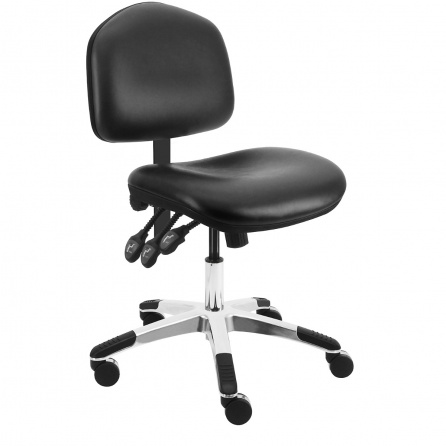
When you spend long hours conducting experiments, analyzing samples, or working at a laboratory bench, your chair directly affects comfort, posture, and productivity. A suitable laboratory chair should support your body while also meeting the cleaning and hygiene demands of your workspace. By evaluating ergonomics, materials, adjustability, durability, and cleanability together, you can choose seating that works reliably throughout your daily routine.
Start With Ergonomic Support
You should begin by considering how the chair supports your body during extended work sessions. A laboratory chair with adjustable seat height allows you to position yourself correctly in relation to benches, instruments, and work surfaces. Your feet should rest comfortably on the floor or a suitable foot ring while your knees remain in a natural position.
Look for features such as:
- Adjustable seat height for different workstations
- Contoured seating for improved comfort
- Supportive backrests that encourage an upright posture
- Foot rings for elevated laboratory seating
- Smooth adjustment mechanisms that are easy to operate
If you frequently switch between tasks or workstations, adjustability becomes even more important. You can change the chair height instead of adapting your posture to an unsuitable work surface.
Choose Materials for Easy Cleaning
Ergonomics should not come at the expense of cleanability. Laboratory environments can expose seating to dust, chemical residues, biological materials, and frequent cleaning routines. Select surfaces that are smooth, non-porous, and resistant to the cleaning procedures used in your facility.
Avoid unnecessary seams, deep grooves, and complicated upholstery patterns that can trap contaminants. A chair with a simple, easy-to-wipe design allows you to clean the seat and backrest more efficiently.
You should also consider how the chair’s construction responds to repeated cleaning. If your laboratory follows strict sanitation procedures, verify that the materials are compatible with your approved cleaning agents before purchasing.
Match the Chair to Your Laboratory Environment
Not every laboratory requires the same type of seating. Before selecting a chair, consider where you will use it and what activities will take place around it.
For example, a general laboratory may prioritize adjustable seating and long-term comfort, while a contamination-sensitive environment may require specialized cleanroom-compatible construction. If the chair will be positioned near wet processes, you may also need materials that tolerate moisture and routine surface cleaning.
Think about your actual workflow:
- How many hours will you sit each day?
- Is the workstation seated or standing height?
- Will several people use the same chair?
- How frequently will the chair be cleaned?
- Could the chair encounter chemicals, moisture, or biological materials?
- Does the laboratory have specific cleanliness requirements?
Answering these questions helps you narrow your options before comparing individual models.
Evaluate Mobility and Stability
Mobility can make laboratory work easier, but excessive movement can create problems. If you regularly move between equipment and work surfaces, casters may improve efficiency. However, you should ensure that the chair remains stable during precision tasks.
For stationary work, a stable base may be preferable. For work requiring frequent repositioning, select a chair with appropriate casters and a durable base designed for laboratory conditions.
You should also examine the adjustment controls. Controls that are easy to reach allow you to change your seating position without interrupting your workflow.
Consider Durability and Maintenance
A laboratory chair is a working tool, not simply office furniture. Frequent use, cleaning, repositioning, and exposure to demanding conditions can place considerable stress on its components.
Inspect the chair’s construction before making a purchase. Pay attention to the base, casters, seat mechanism, backrest, adjustment controls, and connection points. Durable construction can help reduce replacement frequency and maintenance interruptions.
You should also consider replacement parts and service availability. A chair that can be maintained easily may provide greater long-term value than one that requires complete replacement after a minor component fails.
For a broader selection of ergonomic and easy-to-maintain seating, explore adjustable laboratory chairs for ergonomic and cleanable workspaces available from Global Lab Supply.
Create a Practical Selection Checklist
Before purchasing, compare your shortlisted chairs against the requirements of your laboratory. A simple checklist can help you make a practical decision rather than choosing based only on appearance or price.
Check for:
- Adjustability: Can you achieve a comfortable working height?
- Ergonomics: Does the chair provide appropriate support during prolonged work?
- Cleanability: Can the surfaces be wiped and disinfected efficiently?
- Material compatibility: Can the materials tolerate your cleaning procedures?
- Stability: Does the base remain secure during precision work?
- Mobility: Are casters appropriate for your workstation?
- Durability: Can the construction withstand frequent laboratory use?
- Maintenance: Can important components be serviced or replaced?
This approach helps you select seating according to actual laboratory requirements.
Make Comfort and Cleanability Work Together
The right chair should allow you to maintain a comfortable working posture without creating additional cleaning challenges. Instead of focusing on one feature, evaluate the complete design—from seat height and back support to surface materials, mobility, and maintenance.
When you match the chair to your laboratory’s workflow and cleanliness requirements, you can create a more comfortable and practical work environment. Review laboratory seating options from Global Lab Supply for ergonomic laboratory and cleanroom applications and compare the features that matter most to your workspace.
If you need help determining which seating characteristics fit your application, contact us today for laboratory chair selection assistance.
FAQs About Laboratory Chairs
What makes a laboratory chair ergonomic?
An ergonomic laboratory chair typically offers adjustable height, appropriate back support, comfortable seating, and positioning features that help you maintain a natural posture while working.
Why is cleanability important for laboratory chairs?
Laboratory chairs can encounter dust, spills, residues, and contaminants. Smooth, non-porous, easy-to-clean surfaces can make routine sanitation more efficient.
Should laboratory chairs have casters?
Casters can be useful when you frequently move between workstations. However, stationary laboratory tasks may benefit from a more stable seating design.
What materials are suitable for laboratory seating?
Suitable materials depend on your application and cleaning procedures. You should select surfaces that are durable, easy to clean, and compatible with the cleaning agents used in your facility.
How do you choose a laboratory chair for long work sessions?
Prioritize adjustable height, supportive seating, appropriate back support, stability, breathable or suitable surfaces, and compatibility with your workstation and cleaning requirements.